Mr Thomas Satyadas is a leading consultant surgeon with specialist expertise in robotic and advanced laparoscopic surgery for conditions affecting the liver, pancreas, and biliary system. His extensive background in advanced and major laparoscopic liver resections has provided a strong foundation for his pioneering work in robotic surgery, placing him at the forefront of minimally invasive techniques. This unique dual expertise offers patients from Manchester, Cheshire, and across the UK access to state-of-the-art treatments, ensuring the safest and most effective treatment for even the most challenging liver conditions.

For patients across Manchester and Cheshire (UK), he provides a highly specialised, patient-centric approach to the diagnosis and management of a wide range of liver conditions, from simple liver cysts to the most complex primary and secondary liver cancers.

His extensive training and experience in minimally invasive hepato-pancreato-biliary (HPB) surgery ensure that every patient receives a meticulously planned and precisely executed treatment strategy, focused on achieving the best possible clinical outcomes while minimising the impact of surgery.

All patients are discussed in the Manchester Centralised HPB MDT, and from there a patient-focused and bespoke approach to patient care is formalised. This is discussed with the patient to achieve the best outcome for them with a Shared Decision Making (SDM) principle as the central focus.

Pioneering Safe and Effective Robotic Surgery Programs

Mr. Satyadas has been instrumental in the development and implementation of robotic surgery programs in the North West of England. He has successfully implemented safe and effective robotic programs for:

HPB (Hepato-Pancreato-Biliary) Surgery at both The Alexandra Hospital and Manchester Royal Infirmary.


Cholecystectomy (Gallbladder Removal)

Liver Resection

Pancreatic Surgery

To ensure the highest standards of patient safety and clinical excellence, Mr. Satyadas has established a robust governance structure. This includes ongoing audits, video reviews of surgical procedures, presentations of outcomes, and meticulous data collection. He is also committed to the training and development of surgical team members in robotic techniques, ensuring a legacy of expertise and quality care.

Doctor handing Effective pills to a patient

Mr Satyadas Surgical Management for Liver-related Conditions

Mr Satyadas provides expert surgical management for a spectrum of benign and malignant liver conditions, applying his advanced skills in minimally invasive surgery.

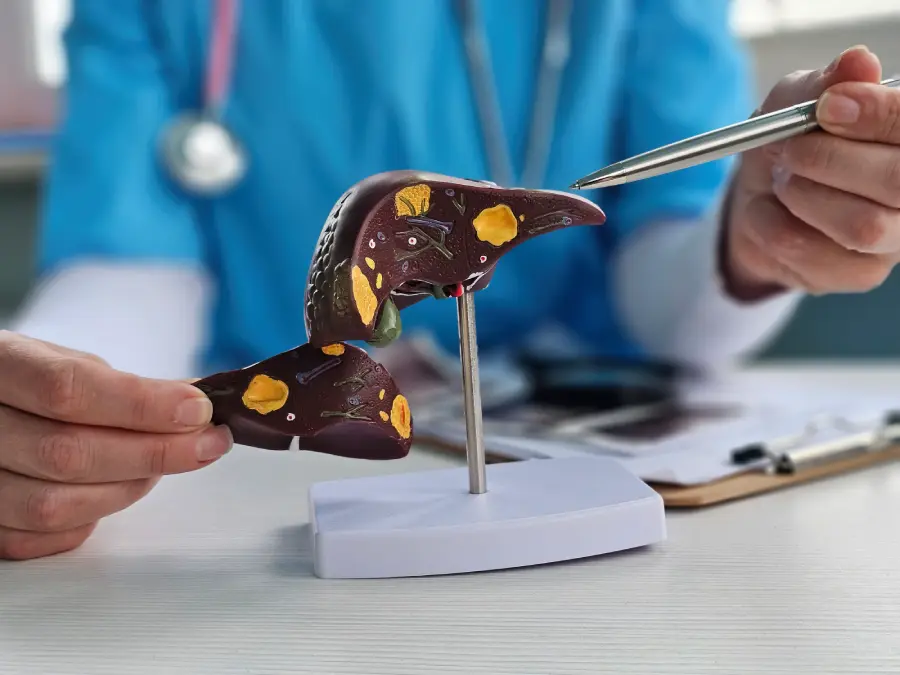
Liver Cysts

These are fluid-filled sacs that form in the liver. The vast majority are simple cysts, which are benign (non-cancerous) and do not cause any symptoms. In most cases, they require no treatment. However, if a cyst grows very large, it can cause pain, bloating, or a feeling of fullness. In these instances, surgical intervention may be recommended. 

Mr Satyadas performs minimally invasive deroofing of large symptomatic cysts, a procedure to remove the cyst wall and prevent it from refilling, although there is a chance of recurrence.

Some other cysts which are complex cysts or IPN(B) or biliary cystadenomas can have the potential to change to malignancy and these patients will be discussed in the central HPB MDT and a proposal of resection might be offered if the patient is fit.

Primary Liver Cancer

This is cancer that originates within the liver itself. The two most common types are:

Hepatocellular Carcinoma (HCC): This is the most common form of primary liver cancer and typically develops in individuals with underlying chronic liver disease and cirrhosis.

Intrahepatic Cholangiocarcinoma (ICC): This is a rarer form of primary liver cancer that arises from the cells of the bile ducts within the liver.

Mr Satyadas has extensive experience in the surgical resection of primary liver cancers, using robotic and laparoscopic techniques to remove the tumour while preserving as much healthy liver tissue as possible.

Colorectal / Metastatic (Secondary) Liver Disease

This is cancer that has spread to the liver from another part of the body. The liver is a common site for metastases due to its rich blood supply. Mr Satyadas specialises in operating on liver metastases from various primary cancers, including:

Bowel (Colorectal) Cancer: The most common source of liver metastases

Neuroendocrine Tumours (NETs): Slow-growing tumours that often spread to the liver.

Breast Cancer: Can also metastasize to the liver.

For suitable candidates, surgical removal of these secondary tumours can offer the best chance for long-term survival and is a key part of a multidisciplinary cancer treatment plan.

Investigations

Routine blood test including tumour markers

CT with IV contrast

  MRI scan with hepatobiliary contrast

  PET scan

  Fitness assessment

  Discussions in the HPB MDT

Minimally Invasive Surgery: Robotic and Laparoscopic Options

Liver resection is a complex procedure that demands immense precision. Mr Satyadas is a strong advocate for a minimally invasive approach, offering both robotic-assisted and standard laparoscopic surgery. The choice of technique is a shared decision, made in consultation with the patient to ensure the best approach for their individual circumstances and clinical needs.

Colorectal / Metastatic (Secondary) Liver Disease

Mr Satyadas is one of the leading surgeons in the UK with expertise in robotic liver surgery. This state-of-the-art technology represents a significant advancement in minimally invasive care. From a specialised console, the surgeon controls robotic arms that hold the surgical instruments. The system provides a stable, high-definition, 3D-magnified view of the operative field, far surpassing the 2D view of traditional laparoscopy. 

The robotic instruments have a wrist-like function, allowing for a range of motion and dexterity that exceeds the human hand. This technological superiority translates into significant patient benefits. For the surgeon, it allows for more precise dissection of liver tissue, meticulous control of blood vessels, and the ability to perform complex reconstructions in anatomically challenging locations.

For the patient, this means less blood loss, reduced post-operative pain, a shorter hospital stay, and a faster return to normal life. The excellent outcomes of Mr. Satyadas’s robotic surgery program speak for themselves:

Very low conversion rate in liver and pancreatic surgery.

Minimal wound infection rate.

Reduced wound-related complications in liver and pancreatic surgery.

This patient-centric application of technology is at the heart of Mr Satyadas’s practice, ensuring the safest and most effective treatment for even the most challenging liver conditions.

Recovery and Aftercare

The recovery journey is a critical phase of treatment. Following a robotic or laparoscopic liver resection, patients are closely monitored. The length of hospital stay is significantly shorter than after traditional open surgery. Mr Satyadas and his team provide dedicated post-operative support, with clear guidance on pain management, wound care, and a structured plan for gradually returning to normal activities.

The liver’s remarkable ability to regenerate begins almost immediately after surgery. Follow-up appointments, including imaging scans, will be scheduled to monitor the liver’s recovery and, in the case of cancer, to check for any signs of recurrence. This long-term commitment to patient care ensures a supportive and reassuring experience throughout the entire treatment pathway.

Emphasis on Prehabilitation in Mr Thomas’s practice Allows better post-operative outcomes for patients. 

Prehabilitation

Mdt discussion (Tailored Care approach for each Patient) Individualistic

Shared Decision making

Robotic SURGERY

Enhanced recovery after surgery

Bespoke Patient Tailored Approach

Working Time

Monday - Thursday 08:00 - 18:00
Friday 08:00 - 18:00
Saturday 08:00 - 18:00