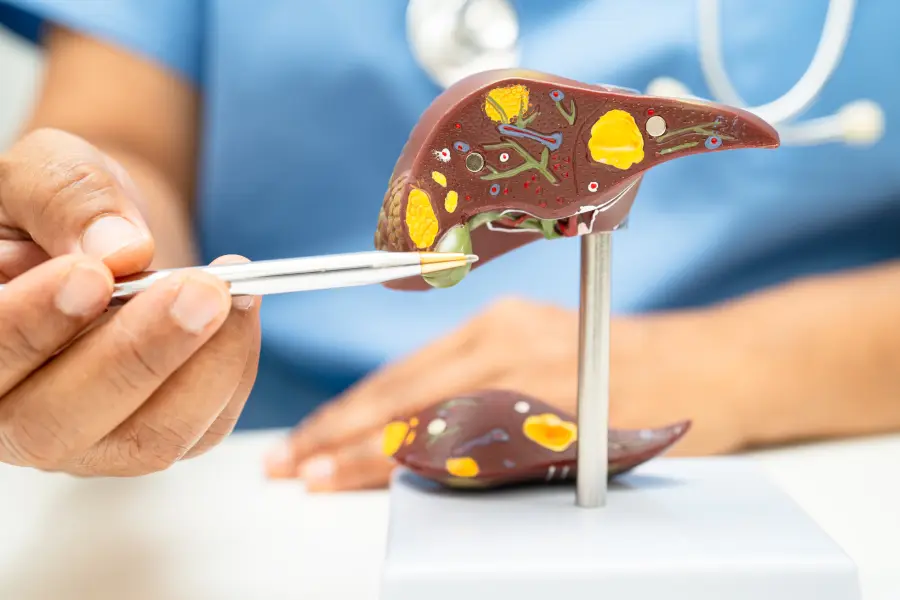
Mr Thomas Satyadas is a highly experienced consultant surgeon specialising in robotic and advanced laparoscopic surgery for conditions affecting the gallbladder, liver, and pancreas. Serving patients across Manchester and Cheshire, he provides a patient-centric approach to diagnosing and treating a range of gallbladder issues, from common gallstones to complex cases of gallbladder cancer. 

His extensive expertise in minimally invasive techniques ensures that each patient receives a treatment plan tailored to their specific needs, with a focus on precision, safety, and achieving the best possible long-term outcomes.

Gallbladder Surgery

Common Gallbladder Conditions

Mr Satyadas manages a wide spectrum of gallbladder conditions, applying his specialist skills to deliver precise and effective treatments.

Gallstones:

These are small, hard deposits that form in the gallbladder and are the most common cause of gallbladder problems. They can range in size from a grain of sand to a golf ball. While many people with gallstones have no symptoms, they can cause sudden, intense pain (biliary colic), inflammation (cholecystitis), or blockages in the bile ducts, Jaundice, sepsis or Pancreatitis, which may require urgent treatment.

Gallbladder Polyps:

These are growths that protrude from the inner lining of the gallbladder wall. The vast majority of polyps are benign (non-cancerous) and cause no symptoms. However, larger polyps (typically over 1cm) have a potential risk of becoming cancerous. Mr Satyadas uses careful assessment and high-definition imaging to monitor polyps and will recommend surgery if there are any concerning features or size that has reached or gone beyond the recommended threshold of 1cm.

Gallbladder Cancer:

Although rare, gallbladder cancer is a serious condition that requires specialist care. It often develops in the context of other long-standing gallbladder issues, such as large gallstones or polyps. Because the symptoms can be vague and non-specific in the early stages, it is often diagnosed at a more advanced stage. 

All patients will be discussed in a central HPB Multi disciplinary Team Meeting to come to the right proposal of care.  Mr Satyadas has extensive experience in the surgical management of gallbladder cancer, utilising advanced robotic techniques to perform complex resections with the aim of complete tumour removal.

Diagnosis

To diagnose a gallbladder condition, Mr Satyadas will conduct a thorough evaluation, starting with a detailed review of your symptoms and a physical examination. The most common initial diagnostic test is an abdominal ultrasound, which is a non-invasive scan that can effectively detect gallstones and polyps. 

For more complex cases, or if cancer is suspected, further imaging such as a CT scan, MRI, or a specialised endoscopic ultrasound may be required to provide a more detailed view of the gallbladder and surrounding structures.

Advanced Surgical Treatment Options

For most gallbladder conditions requiring intervention, the definitive treatment is a cholecystectomy (surgical removal of the gallbladder). Mr Satyadas is a proponent of a minimally invasive approach, which offers significant advantages over traditional open surgery.

Laparoscopic Cholecystectomy:

This is the standard ‘keyhole’ procedure for removing the gallbladder. It involves making a few small incisions in the abdomen to insert a camera and specialised surgical instruments. It is associated with less pain, a shorter hospital stay, and a quicker recovery.

Robotic-Assisted Cholecystectomy:

As a specialist in robotic surgery, Mr Satyadas utilises this advanced technology for both routine and complex gallbladder cases. The robotic platform provides a high-definition, 3D-magnified view and instruments that have a greater range of motion than the human hand. 

This translates to enhanced precision and control, which is particularly crucial when dealing with severe inflammation, complex anatomy, or when performing surgery for gallbladder cancer. This patient-centric approach ensures the highest level of surgical accuracy, aiming to minimise risks and optimise outcomes.

For gallbladder cancer, the operation may be more extensive, potentially involving the removal of part of the liver and nearby lymph nodes. Mr Satyadas’s expertise in both advanced laparoscopic and robotic HPB (hepato-pancreato-biliary) surgery makes him uniquely qualified to perform these complex procedures.

Gallbladder Surgery
Gallbladder Surgery

Recovery and Aftercare

A patient’s journey does not end with surgery. Mr Satyadas is committed to providing comprehensive aftercare to ensure a smooth and comfortable recovery. Following a minimally invasive cholecystectomy, most patients can go home the same day or after a one-night stay. You will receive clear instructions on wound care, pain management, and a gradual return to normal activities.

Recovery is typically swift, with most people resuming light activities within a week and feeling back to normal within a few weeks. You can live a full and healthy life without your gallbladder, and your digestive system will adapt. A follow-up consultation, usually in two weeks, will be scheduled to monitor your progress and ensure you are healing well, reflecting a commitment to patient wellbeing throughout the entire treatment process.

Working Time

Monday - Thursday 08:00 - 18:00
Friday 08:00 - 18:00
Saturday 08:00 - 18:00