

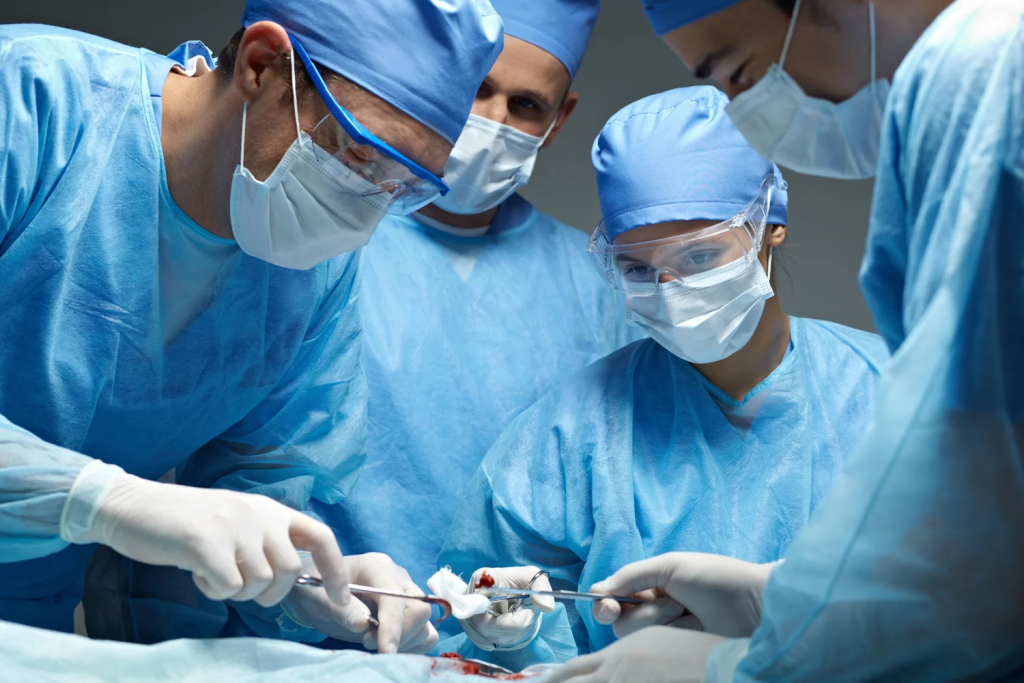
Mr Thomas Satyadas is a consultant surgeon specialising in robotic and advanced laparoscopic surgery for hepato-pancreato-biliary (HPB) conditions. For patients across Manchester and Cheshire requiring gallbladder removal, he offers expertise in robotic-assisted cholecystectomy. His approach is grounded in a philosophy of shared decision-making, ensuring that every patient receives a personalised care plan designed to achieve the best possible outcome.
What is Robotic Gallbladder Surgery?
Robotic gallbladder surgery, or robotic cholecystectomy, is a minimally invasive procedure to remove the gallbladder using a robotic surgical system. The surgeon operates from a specialised console, controlling robotic arms that hold miniaturised instruments and a high-definition 3D camera. This technology provides enhanced visualisation and greater instrument dexterity compared to conventional laparoscopic surgery.
The gallbladder is a small, pear-shaped organ that stores bile produced by the liver. When gallstones form or the gallbladder becomes inflamed, it can cause significant pain and complications. Surgical removal is the definitive treatment, and the gallbladder is not essential for normal digestion, meaning patients can live healthy lives without it.
Is This the Right Operation for You?
Determining the best course of treatment is a collaborative process. Mr Satyadas is committed to the principle of selecting the right operation for the right patient. During your consultation, he will perform a thorough evaluation and discuss all appropriate options with you.
Robotic cholecystectomy may be recommended for:
✓ Symptomatic Gallstones: Causing recurrent episodes of severe upper abdominal pain (biliary colic).
✓ Acute Cholecystitis: Sudden inflammation of the gallbladder, often requiring urgent surgical intervention.
✓ Chronic Cholecystitis: Long-standing inflammation leading to a thickened, scarred gallbladder wall.
✓ Gallbladder Polyps: Larger polyps (typically over 1cm) that carry a risk of malignancy.
✓ Biliary Dyskinesia: A condition where the gallbladder does not empty properly, causing pain.
✓ Gallbladder Cancer: In cases where cancer is suspected or confirmed, a more extensive resection may be required. These complex cases are always discussed in a Multi-Disciplinary Team (MDT) meeting to ensure a comprehensive, expert-led plan is formulated.
The robotic approach is particularly advantageous for patients with complex anatomy, previous abdominal surgery, or severe inflammation, where its technical capabilities can be beneficial.
Technical Advantages of the Robotic Approach
The robotic platform offers several technical advantages that can enhance the safety and precision of the procedure:
✓ Enhanced Visualisation: The 3D high-definition camera provides superior depth perception, allowing for clear identification of critical structures like bile ducts and blood vessels.
✓ Greater Precision: The robotic instruments have articulated “wrists” that mimic the human hand, enabling more precise dissection and suturing.
✓ Improved Ergonomics: The surgeon operates from a comfortable, seated position, which reduces fatigue and allows for steadier, more controlled movements.
For patients, these technical benefits can translate into a procedure with a reduced risk of injury to surrounding structures.
Your Recovery: A Multidisciplinary Pathway
Your surgical journey is carefully managed from start to finish. Before surgery, you may be guided through a prehabilitation programme to optimise your health and fitness. After surgery, your care will follow an Enhanced Recovery After Surgery (ERAS) pathway, an evidence-based approach designed to accelerate your recovery.
This is supported by a multidisciplinary recovery pathway, where Mr Satyadas works alongside specialist nurses, dietitians, and physiotherapists to provide comprehensive care.
Immediate Post-Operative Period
Most patients can go home the same day or after an overnight stay. It is normal to experience some discomfort at the small incision sites and potential shoulder tip pain (caused by residual gas from surgery), which typically resolves within a few days and is managed with simple analgesics.
Dietary Adjustments
Some patients may notice changes in their digestion, particularly with fatty foods, in the weeks following surgery. Mr Satyadas provides clear guidance on this, and most patients find their digestive system adapts well over time.
Wound Care
The small incisions require minimal care. They are typically closed with dissolvable sutures and covered with waterproof dressings, allowing you to shower normally.
Follow-Up
A follow-up appointment is arranged to ensure you are recovering well and to discuss the histology (pathology) results of the removed gallbladder, ensuring a full continuum of care.