Mr Thomas Satyadas is a specialist consultant surgeon with extensive expertise in robotic and advanced laparoscopic surgery. He offers expert assessment and treatment for various types of hernias to patients across Manchester and Cheshire.
With a primary focus on employing minimally invasive techniques, he provides advanced surgical solutions for conditions including inguinal, femoral, umbilical, and incisional hernias. His deep experience in complex abdominal wall reconstruction, combined with his refined skills in laparoscopic and robotic procedures, allows him to manage both straightforward and complex hernia cases with a high degree of precision and care, aiming for the best possible patient outcomes.
Understanding Hernias: Types We Treat
Mr Satyadas provides surgical treatment for a range of hernias, tailoring the approach to each patient’s specific condition and anatomical needs. Understanding the type of hernia is the first step towards effective treatment.
Inguinal Hernia
This is the most prevalent type of hernia. It happens when part of the intestine or fatty tissue protrudes through a weak spot in the abdominal muscles in the groin area. Inguinal hernias are far more common in men and can cause a visible bulge and discomfort that may worsen with physical activity or straining.
Femoral Hernia
Also located in the groin area near the upper thigh, a femoral hernia is less common. It occurs when tissue pushes through the femoral canal. This type is more frequently seen in women. Due to a higher risk of developing complications, such as strangulation (where the blood supply to the herniated tissue is cut off), surgical repair is often advised.
Umbilical Hernia
An umbilical hernia is a bulge that appears near the navel (belly button). It happens when part of the intestine or fatty tissue pushes through the abdominal wall at this point. While common in infants, they can also affect adults, often due to factors that increase abdominal pressure, such as obesity or multiple pregnancies. Surgical intervention may become necessary if the hernia becomes painful or grows larger.
Incisional Hernia
This type of hernia can develop at the site of a previous surgical incision. The abdominal wall can be weakened by a prior surgery, allowing tissue to push through the scar. Incisional hernias can vary significantly in size and complexity. Mr Satyadas often utilises advanced robotic and laparoscopic techniques to repair them, as these methods may help to reduce the risk of recurrence.
Recurrent Hernias
Mr Satyadas also has specialist expertise in managing recurrent hernias—those that reappear after a previous surgical repair. These cases can be more complex due to scar tissue and altered anatomy. They often benefit from the precision and enhanced visualisation offered by minimally invasive, and particularly robotic-assisted, surgery.
Your Consultation and Diagnosis
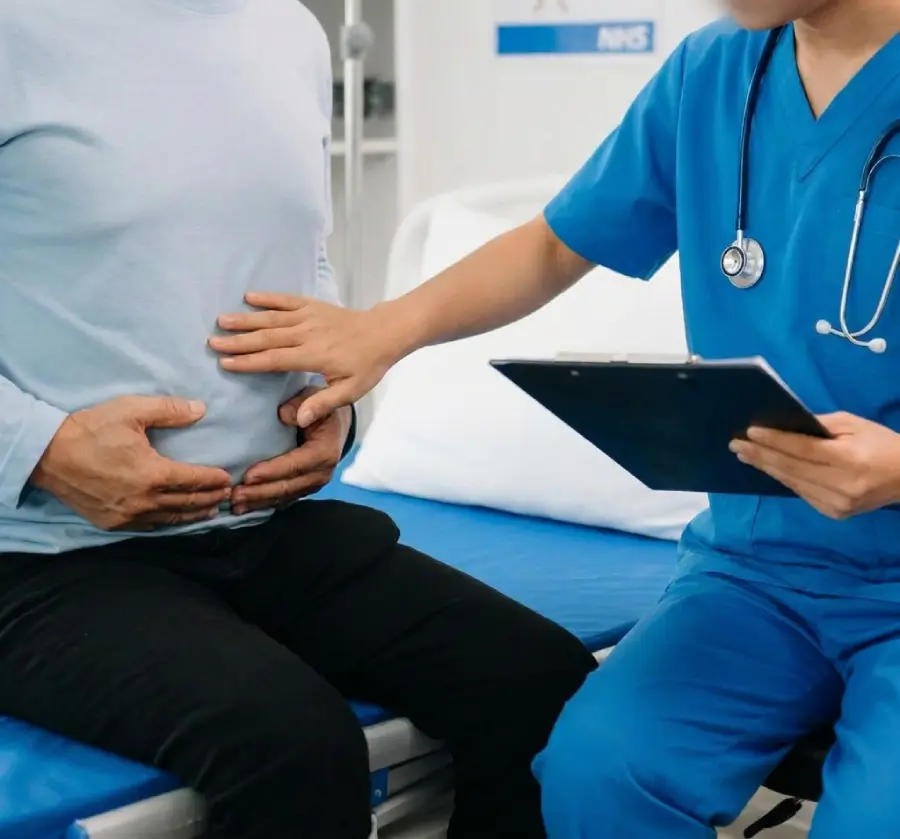
During your consultation, Mr Satyadas will review your medical history and perform a thorough physical examination. In most cases, this is sufficient to confirm the diagnosis. For certain complex cases, or if the diagnosis is unclear, an imaging study such as an ultrasound, CT, or MRI scan may be recommended to get a more detailed view of the hernia and surrounding tissues.
Advanced Surgical Treatment Options
Once a hernia is diagnosed, the most effective and definitive treatment is surgical repair. Mr Satyadas specialises in minimally invasive surgical techniques, and the most appropriate approach will be discussed with you based on the type and size of your hernia, your overall health, and your personal circumstances.
Laparoscopic Surgery
This ‘keyhole’ technique involves making several small incisions. A laparoscope (a thin tube with a camera) is inserted to provide a view of the internal organs, and specialised instruments are used to repair the hernia. A piece of synthetic mesh is typically placed to reinforce the weakened area, reducing the chance of recurrence.
Robotic Surgery
This is an advanced form of minimally invasive surgery. The surgeon sits at a console and controls robotic arms that hold the surgical instruments. This technology provides a high-definition, 3D view of the surgical site and allows for exceptionally precise movements. Robotic surgery offers similar benefits to laparoscopy, including smaller incisions, less pain, and faster recovery compared to traditional open surgery, and is particularly useful for complex or recurrent hernias.
Recovery and Aftercare
Post-treatment care is a crucial component of a successful recovery. Following your hernia repair, you will receive personalised aftercare instructions to ensure a smooth healing process. This will include guidance on managing any discomfort and caring for your incision sites.
The recovery period varies, but patients undergoing minimally invasive repair often recover quickly. Most patients can expect to return to light activities and office-based work within two to three weeks. Strenuous activities and heavy lifting should be avoided for a longer period, typically four to six weeks, to allow the repair to heal properly and minimise the risk of recurrence. A follow-up appointment will be arranged to monitor your progress and ensure you are healing well.